
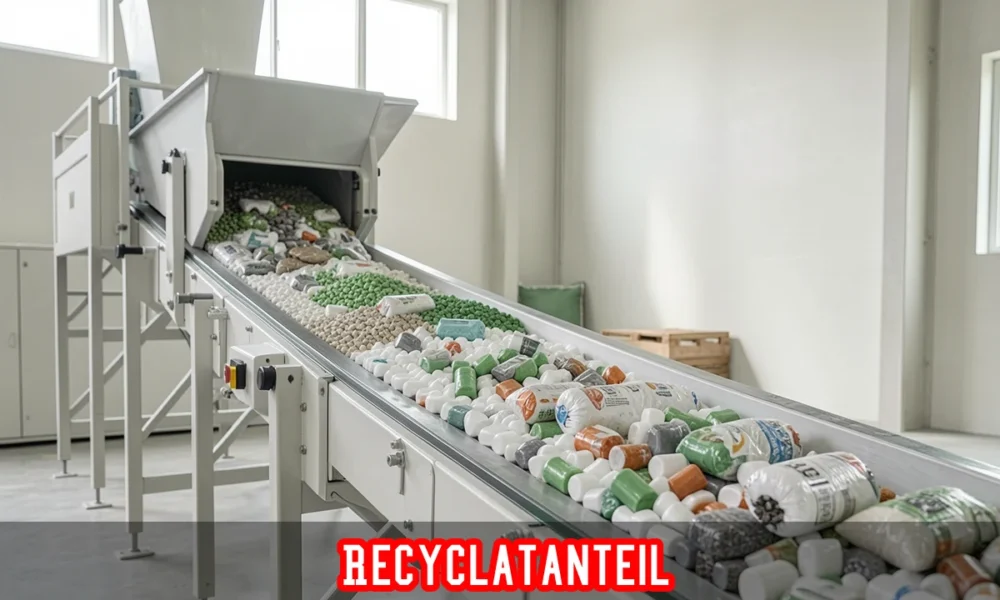
Recyclatanteil Explained: How Recycled Content Is Measured
Recyclatanteil refers to the percentage of recycled material used in a finished product. Manufacturers calculate it by dividing the weight of recycled input by the total material weight. A higher recyclatanteil signals lower virgin resource use and reduced environmental impact across the production cycle.
When a product label says “made with recycled materials,” that claim needs a number behind it. That number is the recyclatanteil — the recycled content ratio — and it’s becoming one of the most tracked figures in modern manufacturing.
Recyclatanteil is a German-origin term now widely used in sustainability reporting, product certification, and supply chain documentation. It tells you exactly how much of a product’s material weight comes from post-consumer or post-industrial recycled sources. The higher the percentage, the less virgin raw material was consumed during production.
Understanding how this number works, how it’s measured, and why it matters helps you make better decisions — whether you’re a buyer, a brand, or a manufacturer managing compliance.
What Recyclatanteil Actually Measures
Recyclatanteil is calculated as a simple ratio:
Recyclatanteil (%) = (Weight of recycled input material ÷ Total material weight) × 100
So if a product weighs 200 grams and contains 80 grams of recycled plastic, the recyclatanteil is 40%.
But this calculation isn’t always as clean as it looks. Two inputs count toward recycled content:
- Post-consumer recycled (PCR) material — material recovered after it reached the end-user (plastic bottles, cardboard packaging, used electronics)
- Post-industrial recycled (PIR) material — production offcuts and manufacturing waste are rerouted back into supply chains before reaching consumers
Both types count, but many certifiers and buyers now separate them. Post-consumer recycled material is typically valued higher because it diverts waste that would otherwise reach a landfill or incinerator.
Why Manufacturers Track This Number
Recyclatanteil has moved from a voluntary metric to a near-mandatory one in several industries. Here’s what’s driving that shift.
Regulatory pressure is increasing. The EU’s Packaging and Packaging Waste Regulation sets minimum recycled content targets. By 2030, plastic beverage bottles must contain at least 30% recycled content. Contact-sensitive plastic packaging must hit 10% by the same date. Manufacturers that can’t document their recyclate risk losing market access in regulated markets.
Procurement standards now require it. Major brands across automotive, electronics, and apparel sectors have added recycled content minimums to supplier contracts. A 2023 survey by the Ellen MacArthur Foundation found that 68% of FMCG companies had set formal recycled content targets in their sourcing policies.
Carbon accounting depends on it. Using recycled material instead of virgin feedstock typically reduces embodied carbon. The recyclatanteil feeds directly into lifecycle assessment (LCA) calculations, which are now standard in Environmental Product Declarations (EPDs) and corporate sustainability reports.
If you’re reporting under GRI Standards, CDP, or the EU Corporate Sustainability Reporting Directive (CSRD), you need this number documented and auditable.
How Verification Works in Practice
Self-reported recyclatanteil figures carry limited credibility without third-party verification. Several certification systems exist to validate claims:
| Certification | Scope | Key Use |
|---|---|---|
| GRS (Global Recycled Standard) | Multi-industry | Full supply chain traceability |
| RCS (Recycled Claim Standard) | Product-level | Single ingredient verification |
| Blauer Engel | Germany | Consumer products |
| EU Ecolabel | EU-wide | Broad product categories |
GRS is the most internationally recognized. It requires chain-of-custody documentation at every stage — from material collector to finished product. Auditors verify that the recyclatanteil claimed on paper matches actual material flows in production.
For brands sourcing at scale, this verification layer matters. Without it, recyclatanteil figures are marketing claims, not auditable data.
Where Recyclatanteil Has the Most Impact
Some industries are moving faster than others on recycled content integration.
Textiles and apparel have seen rapid adoption. Recycled polyester (rPET), made largely from plastic bottles, now accounts for a significant share of synthetic fiber production. Brands like Patagonia and H&M Group publish annual recyclatanteil data broken down by material type.
Packaging is under the most regulatory scrutiny globally. The EU, UK, and several US states have introduced extended producer responsibility (EPR) schemes that tie fees or exemptions to verified recycled content levels.
Automotive is catching up fast. BMW’s iX uses over 20% recycled and reused materials by weight. Volkswagen Group has published roadmaps to increase recyclatanteil across its vehicle platforms, driven partly by EU end-of-life vehicle regulations requiring 25% recycled content in new vehicles by 2030.
Construction materials — especially insulation, panels, and concrete additives — increasingly cite recyclatanteil in product data sheets, particularly for LEED and BREEAM green building certifications.
What a Higher Recyclatanteil Actually Delivers
A higher recyclatanteil isn’t automatically better in every context. You need to understand the trade-offs.
Higher recycled content generally reduces virgin resource extraction and lowers carbon emissions from raw material processing. For plastics, using rPET instead of virgin PET can cut energy use by up to 79%, according to the American Chemistry Council.
But recycled materials sometimes carry quality constraints. Contamination in post-consumer streams affects material performance. Some applications — food-contact packaging, medical devices, high-stress structural components — still have technical barriers to using high-recyclability materials without performance degradation.
The practical answer: target the highest recyclatanteil that your product’s technical requirements allow, then verify and document it properly.
FAQs
What does recyclatanteil mean in English?
It translates to “recycled content ratio” or “recycled material share.” It’s the percentage of recycled input in a product by weight.
Is post-industrial recycled content the same as post-consumer?
No. Post-consumer means the material was used by an end-user first. Post-industrial is factory scrap rerouted during production. Both count but are typically reported separately.
Which certification verifies recyclatanteil most reliably?
The Global Recycled Standard (GRS) offers the most rigorous chain-of-custody verification across industries and geographies.
Does a higher recyclatanteil always mean a more sustainable product?
Not automatically. Material quality, processing energy, and end-of-life options all factor into overall sustainability. Recyclatanteil is one metric, not the whole picture.
Is there a legal minimum recyclatanteil in the EU?
Yes, for certain product categories. The EU Packaging Regulation sets mandatory minimums for plastic packaging, with targets between 10–35% depending on packaging type and application.