
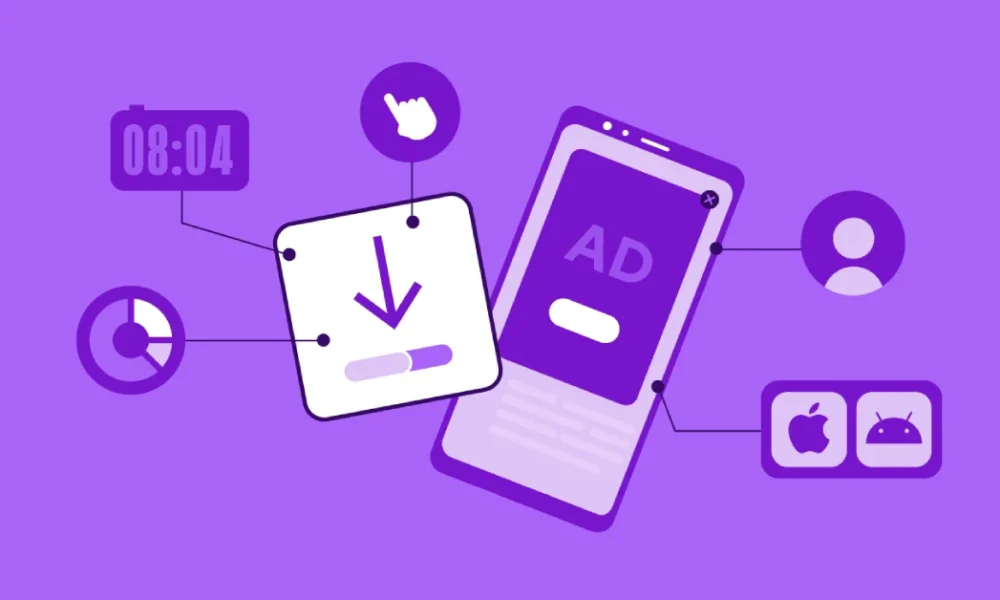
What It Is and How Mobile App Attribution Works
When a marketer is running several marketing campaigns at once, it becomes crucial for them to identify which of their campaign brings how many users, that’s where mobile app attribution comes into play. It shows which ads, media, or campaigns made a user install and activate an application. A suitable attribution methodology will turn raw installs into intelligence that can be used in business to make marketing and product decisions.
Credible attribution instills accountability in marketing practices. Without such attribution, spending becomes pure speculation; with it, teams are able to consider channels not just by volume, but by the quality of the install.
What is Mobile App Attribution
Mobile app attribution determines the marketing touchpoint that led to a user installing or any other action they wanted to do in an application. It captures clicks, impressions and after-install events, thus enabling teams to determine which channels are value-generating. With the help of successful mobile app attribution, installs, in-app conversion, and lifetime measures are recorded, which allows the acquisition strategy to be focused on business goals.
The Working of Mobile App Attribution
Essentially, mobile app attribution collects signals during the ad engagement and correlates them with the events during the time the application is downloaded and used. It balances out the time stamps, identifiers, and events to assign credit to a particular source of advertising and control duplicates and repetitions.
Click-Based Matching
Click matching links, a tap on an advertisement to a later application install. Once a user taps on an advertisement and installs the application, the attribution model identifies the identifiers and timestamps, which confirms the crediting of the right origin.
Impression-Based Matching
Impression-based matching credits adverts that were not clicked. This concept of influence estimation by the view-through methodology approximates influence when a viewer installs an advertisement without direct contact.
Deterministic and Probabilistic Models
Deterministic models are based on exceptional identifiers. The probabilistic models are applied to estimate probable sources of information based on aggregated signals in the presence of unavailable identifiers. Most of the implementations also mix the two strategies to aid sound mobile app attribution in different circumstances.
Selecting a Mobile App Attribution Tool
When choosing a mobile app attribution tool, it is required to focus on accuracy, privacy, and reporting features, which many platforms, such as Apptrove, offer. The best tool must be able to include advertising networks, event-level analytics, and install deduplication.
Core Features to Evaluate
Request live attribute, authoritative install matching, and event tracing. The efficient tool will be installed correctly and offer cohort reporting and retention measures, which will allow optimisation of the campaigns.
Privacy and Compliance
The privacy policies influence the procedure of data collection and linking. A submissive mobile app attribution tool is agile to system directives, possesses data-saving solutions, and continues to provide analytic value without the use to expose personally identifiable information.
Integration and Reporting
Selling to advertisement networks, analytics providers, and data repositories simplifies the operations. Infinite rich reporting, export, and auto dashboards enable teams to take fast action on attribution data of mobile app installs.
The 2024 international advertisement expenditure approximated around $1.1 trillion, of which mobile took nearly 2/3rd of the online advertisement plans. This scale generates a necessity to ensure that accurate mobile app attribution is a crucial element of measuring the return on the spending on the advertisement and channel prioritization.
Common challenges and best practices
Attribution has a number of typical pitfalls that have to be addressed.
Attribution windows and delays
The selection of the right attribution window reconciles the issue of timely credit against user behaviour patterns. The short windows can miss out on late converters and the long windows can over-attribute installs.
Ad Fraud and Validation
Ad fraud can distort results. Sound validation and bot filtering on a mobile app attribution tool protect the quality of data and maintain confidence in the reported installs
Channel and Cross-Device Mapping
Users are communication devices and channels. Successful attribution aligns these touchpoints to provide a consistent picture of the way ad exposures are converted into installs and retention.
Conclusion
Mobile app attribution is an effective tool of measurement that discloses the channels that yield installs and lifetime value. You should select the MMP tool carefully so that marketing expenditure is efficient, transparent, and measurable.
FAQs
What is the difference between mobile app attribution and tracking?
Mobile app attribution assigns credit to specific marketing touchpoints for installs and conversions. Tracking is a broader practice of collecting events and user behavior inside the app to analyze journeys and engagement.
Can mobile app install attribution work with privacy changes?
Yes. Modern systems combine deterministic and probabilistic models and leverage aggregated, privacy-preserving signals and server-side approaches so attribution remains possible while complying with platform rules.
How soon should I implement attribution for a new app?
Integrate attribution before launch or at first user acquisition. Early setup captures initial campaign performance, enables cohort tracking, and ensures you measure install quality and long-term user value from day one.