
SerpClix vs SerpSEO: Honest Comparison Guide for SEOs
SerpClix vs SerpSEO both provide click-through rate boosting services, but differ in delivery methods. SerpClix uses a browser extension network with real users, while SerpSEO employs manual clickers. Pricing starts at $15/month for SerpClix versus $10/month for SerpSEO.
SerpClix vs SerpSEO: Which CTR Tool Wins in 2025?
Your website ranks on page one, but clicks stay flat. You need more traffic without waiting months for organic growth. Click-through rate tools promise a shortcut, but choosing between SerpClix vs SerpSEO requires understanding how each works and what risks you accept.
Both services boost your CTR by sending real or simulated clicks to your search listings. The goal is simple: make Google think your result attracts more users than competitors, potentially improving your position. But delivery methods, pricing, and safety differ significantly.
What Are SerpClix and SerpSEO
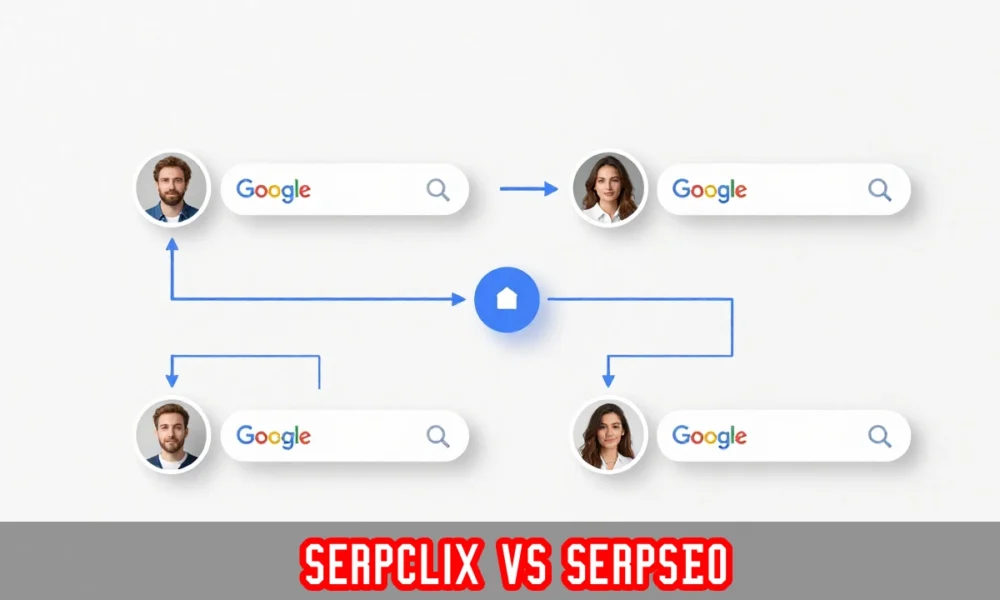
SerpClix operates as a click exchange network. Website owners install a browser extension, perform searches for other members, and earn credits to spend on their own campaigns. The system creates a pool of real people using actual browsers to click target URLs.
SerpSEO takes a different approach. The platform hires manual workers who search for your keywords and click your listings. No browser extensions or automation—just humans following instructions to visit your site from search results.
Both platforms claim to send genuine user signals to search engines. Neither uses bots or automated scripts that trigger obvious red flags. The difference lies in who performs the clicks and how the platforms verify quality.
How Each Platform Delivers Clicks
SerpClix distributes tasks through its extension network. When you order clicks, the system assigns searches to active users in your target geography. These users see your keyword in their task queue, perform the search, find your listing, and click through. The extension tracks completion and credits your campaign.
The platform requires clickers to spend 30-60 seconds on your page before closing the tab. This dwell time mimics real user behavior and sends engagement signals beyond the initial click. Geographic targeting matches IP addresses to your selected regions, though precision varies by location.
SerpSEO employs workers from various countries who manually execute searches. You specify keywords, device type, and location. Workers use regular browsers without special extensions, search Google, locate your result, and visit your site. The platform monitors completion through worker reports rather than automated tracking.
Delivery speed differs between the two. SerpClix typically completes orders within 3-7 days, depending on network availability. SerpSEO often finishes campaigns faster—sometimes within 24-48 hours—because it relies on dedicated workers rather than voluntary participants.
Pricing and Value Comparison
Understanding cost structures helps determine which platform fits your budget. Both use credit-based systems but price differently.
| Feature | SerpClix | SerpSEO |
|---|---|---|
| Starting Price | $15/month | $10/month |
| Clicks per Dollar | 5-7 clicks | 8-10 clicks |
| Geographic Targeting | 50+ countries | 30+ countries |
| Device Options | Desktop, mobile | Desktop, mobile, tablet |
| Minimum Order | 10 clicks | 5 clicks |
SerpClix charges approximately $0.15-$0.20 per click, with bulk discounts at higher tiers. The $15 monthly plan includes 100 credits (roughly 100 clicks). Premium plans offer volume pricing down to $0.12 per click.
SerpSEO prices clicks at $0.10-$0.12 each. The base $10 plan provides 100 clicks. Larger packages reduce per-click costs to $0.08 for orders exceeding 1,000 clicks.
Value depends on your priorities. SerpClix offers higher-quality traffic through browser extension users who resemble organic visitors. SerpSEO provides more clicks per dollar but relies on paid workers who may show less genuine engagement.
Targeting and Control Features
Geographic precision matters when optimizing for local searches. SerpClix vs SerpSEO differ significantly in targeting capabilities.
SerpClix lets you select countries and some major cities. The platform matches clickers based on IP location but cannot guarantee neighborhood-level precision. Mobile versus desktop targeting splits campaigns but adds no extra cost.
SerpSEO provides country-level targeting with better city selection in popular markets like the US and UK. You specify exact device types and can request specific browsers (Chrome, Firefox, Safari). The platform also allows custom instructions—telling workers to scroll, click internal links, or perform specific actions after landing.
Neither service offers demographic targeting. You cannot filter clickers by age, interests, or browsing history. Both platforms also lack scheduling features for spreading clicks over specific hours or days.
Traffic Quality and Detection Risks
Click manipulation violates Google’s Webmaster Guidelines. The search engine explicitly warns against artificial engagement signals. Detection risks vary between platforms.
SerpClix uses real users with authentic browsing patterns. These clickers visit multiple sites daily, have varied search histories, and generate natural session data. The diversity reduces detection likelihood compared to obvious click farms.
However, Google can identify patterns. If many users suddenly search the same obscure keyword and always click position four, algorithms may flag the activity. The platform claims to randomize behavior, but concentrated campaigns on low-volume keywords increase risk.
SerpSEO’s manual workers create realistic individual sessions but face different challenges. Workers often use VPNs or data centers, which Google can identify. Repetitive patterns—same workers clicking your listings repeatedly—create suspicious signals.
Both services carry a permanent ban risk. Google may penalize individual pages, entire domains, or websites in Search Console. Recovery requires disavowing traffic and submitting reconsideration requests, which succeed inconsistently.
Which Service Fits Your Needs
Choose SerpClix vs SerpSEO based on your specific situation and risk tolerance.
Use SerpClix if:
- You need higher-quality traffic that resembles organic clicks
- Budget allows slightly higher per-click costs
- You target competitive keywords where pattern detection matters
- Long-term campaigns require sustained, natural-looking engagement
Use SerpSEO if:
- Cost efficiency matters more than perfect traffic quality
- You need quick delivery for time-sensitive campaigns
- Custom on-page instructions improve your specific goals
- You run short tests rather than ongoing manipulation
Neither platform guarantees ranking improvements. CTR manipulation works as one signal among hundreds that Google evaluates. Sites with poor content, weak backlinks, or technical issues won’t rank better just from click boosts.
Consider legitimate alternatives. Improving meta titles, testing descriptions, and adding schema markup all increase organic CTR without violating risks. PPC campaigns provide immediate traffic while you build real authority.
FAQs
Do SerpClix and SerpSEO actually improve rankings?
Results vary. Some users report modest improvements for specific keywords, while others see no change. Google’s algorithm weighs hundreds of factors beyond CTR.
Can Google detect these services?
Yes. Both platforms create patterns that Google may identify. Detection risk increases with campaign volume and keyword obscurity.
Which service offers better geographic targeting?
SerpClix provides broader country coverage, while SerpSEO offers better city-level precision in major markets.
How long do results last?
Temporary. Stopping campaigns often returns rankings to previous levels within weeks as click signals fade.
Are there legal concerns with using these tools?
Not legally prohibited, but violates Google’s terms of service. Risk includes permanent search visibility loss.