
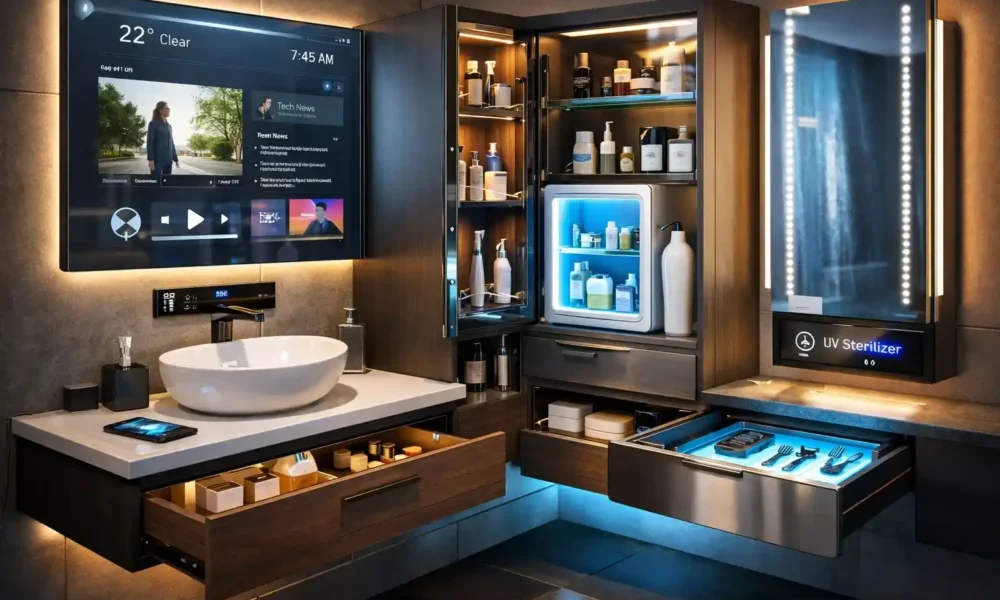
How Technology is Shaping Contemporary Bathroom Cabinet Design
Why Are Bathroom Cabinets No Longer “Just Storage”?
Walk into any modern home, hotel, or co-living space today, and you’ll notice one thing immediately: bathroom cabinets have evolved far beyond simple boxes mounted on walls.
What was once a purely functional element has become a technology-driven design statement blending aesthetics, precision engineering, sustainability, and smart usability. This shift is redefining contemporary bathroom cabinet designs, especially across design-forward markets like the UK and the USA.
For business owners, architects, engineers, and tech decision-makers, this evolution presents both new challenges and significant opportunities particularly in the CAD design and drafting ecosystem.
So, how exactly is technology shaping the future of bathroom cabinetry? Let’s explore.
How Has CAD Technology Transformed Bathroom Cabinet Design?
Computer-Aided Design (CAD) has fundamentally changed how bathroom cabinets are conceptualized, tested, and delivered.
In the past, cabinet design relied heavily on manual drawings and physical prototypes. Today, CAD enables designers to:
-
Create highly detailed 2D and 3D models
-
Visualize materials, finishes, and hardware in real time
-
Identify clashes before manufacturing begins
-
Customize dimensions down to the millimeter
This precision is critical for bathroom cabinet modern design, where space constraints, plumbing coordination, and aesthetic harmony must align perfectly.
According to Autodesk’s industry insights, over 70% of design firms using advanced CAD and BIM tools report reduced rework and faster project delivery, a major advantage in competitive UK and US construction markets.
Why Are Contemporary Bathroom Cabinet Designs Becoming More Custom and Modular?
One of the biggest technology-led trends is the shift toward customization at scale.
Thanks to parametric CAD modeling, designers can now:
-
Adjust cabinet sizes instantly for different layouts
-
Create modular cabinet systems for residential and commercial projects
-
Adapt designs for accessibility, storage needs, and user behavior
This is particularly valuable for startups, developers, and hospitality brands that want consistent design language across multiple properties while still allowing flexibility.
In modern bathroom cabinet design, CAD-driven modularity helps balance:
-
Design consistency
-
Manufacturing efficiency
-
Client personalization
The result? Faster approvals, fewer errors, and happier stakeholders.
What Role Does 3D Visualization Play in Design Decision-Making?
3D visualization has become a game-changer for decision-makers who may not read technical drawings fluently.
With advanced rendering and walkthroughs, CAD teams can now present:
-
Realistic cabinet textures and finishes
-
Lighting effects on glossy or matte surfaces
-
Drawer mechanisms, hinges, and internal storage layouts
For architects and developers in the UK and USA, this reduces ambiguity and speeds up approvals.
A report by McKinsey on construction technology highlights that projects using digital visualization tools experience up to 20% fewer design-related delays, a significant saving in time and cost.
How Is Smart Technology Influencing Bathroom Cabinet Design?
Smart homes are no longer futuristic concepts, they’re mainstream.
This shift is influencing contemporary bathroom cabinet designs in subtle but powerful ways, including:
-
Integrated LED lighting with motion sensors
-
Soft-close drawers with smart dampers
-
Hidden charging stations for grooming devices
-
Mirror cabinets with touch controls and defogging
Designing these features requires highly coordinated CAD drafting, ensuring electrical, mechanical, and spatial elements align seamlessly.
According to Statista’s smart home market data, the global smart home market is expected to exceed USD 230 billion by 2028, directly impacting kitchen and bathroom cabinet design requirements.
Why Is Sustainability Driving Technology Adoption in Cabinet Design?
Sustainability is no longer optional especially in the UK, where regulations and consumer expectations are pushing green design forward.
CAD technology supports sustainable bathroom cabinet design by enabling:
-
Accurate material take-offs to reduce waste
-
Optimization of panel sizes for efficient manufacturing
-
Selection of eco-friendly materials and finishes
-
Lifecycle analysis during early design stages
For engineering teams and project managers, this data-driven approach supports compliance with BREEAM, LEED, and other green building standards.
In fact, a UK Green Building Council study indicates that digitally optimized design can reduce material waste by up to 15% in interior fit-out projects.
How Are Manufacturing and CNC Integration Changing Cabinet Drafting?
Another major shift is the integration between CAD design and CNC manufacturing.
Today’s bathroom cabinet CAD drawings are often:
-
Directly linked to CNC machines
-
Exported as fabrication-ready files
-
Used to automate cutting, drilling, and assembly
This tight integration reduces human error and speeds up production particularly important for large-scale residential and commercial developments in the USA and UK.
For cabinet manufacturers, accurate CAD drafting means:
-
Faster turnaround times
-
Reduced labor dependency
-
Consistent quality across batches
This is where technical drafting expertise becomes a competitive advantage.
What Challenges Do Designers and Businesses Face with Advanced Technology?
While technology unlocks huge potential, it also introduces challenges.
Common issues include:
-
Skill gaps in advanced CAD and 3D modeling tools
-
Managing complex design revisions
-
Aligning design intent with manufacturing constraints
-
Rising expectations for speed and accuracy
For startups and growing firms, balancing in-house resources with outsourced CAD support is often the smartest approach.
The key is choosing partners who understand both design aesthetics and technical execution especially in modern bathroom and kitchen cabinetry projects.
How Does Technology Create New Opportunities for Design-Led Businesses?
Despite the challenges, the opportunities are far greater.
Technology enables businesses to:
-
Offer premium, design-led solutions
-
Enter international markets with confidence
-
Reduce project risk through accurate drafting
-
Deliver better client experiences
In the context of contemporary bathroom cabinet designs, CAD technology is no longer a back-office tool, it’s a strategic business asset.
Final Thoughts:
The future of bathroom cabinet design sits at the intersection of technology, sustainability, and user experience.
As CAD tools become more intelligent and integrated, designers and decision-makers who embrace these technologies will lead the market especially in design-conscious regions like the UK and USA.
For organizations seeking reliable execution without compromising creativity, collaborating with an experienced UK-based CAD design company can help bridge the gap between vision and reality ensuring that modern bathroom cabinets are not only beautiful but also buildable, scalable, and future-ready.
FAQs
1. What are contemporary bathroom cabinet designs?
Contemporary bathroom cabinet designs focus on clean lines, minimal hardware, smart storage, and modern materials. Technology like CAD and 3D visualization helps create precise, space-efficient, and customizable cabinet solutions for today’s homes.
2. How does CAD technology improve bathroom cabinet design?
CAD technology allows designers to create accurate 2D and 3D cabinet models, test layouts, visualize finishes, and reduce errors before manufacturing. This results in faster approvals, lower costs, and better-quality bathroom cabinet designs.
3. Why is 3D modeling important for modern bathroom cabinets?
3D modeling helps architects and clients visualize cabinet size, material, lighting, and functionality before production. It improves decision-making, reduces rework, and ensures the final bathroom cabinet modern design matches the original concept.
4. How is smart technology influencing bathroom cabinet design?
Smart technology enables features like LED-lit cabinets, touch-sensor mirrors, soft-close drawers, and integrated charging points. CAD drafting ensures these elements are accurately planned and seamlessly integrated into contemporary bathroom cabinet designs.
5. Are contemporary bathroom cabinets customizable?
Yes, modern CAD tools allow for highly customizable bathroom cabinet designs. Designers can easily modify dimensions, storage layouts, materials, and finishes to suit different spaces, budgets, and user needs in the UK and USA markets.
6. How does technology support sustainable bathroom cabinet design?
Technology helps optimize material usage, reduce waste, and select eco-friendly materials. CAD-based planning supports sustainable kitchen and bathroom cabinet design by improving accuracy and supporting green building standards.
7. What is the future of bathroom cabinet design in the UK and USA?
The future of bathroom cabinet design lies in smart features, modular systems, sustainable materials, and advanced CAD-driven workflows. Businesses adopting these technologies will deliver more efficient, stylish, and future-ready solutions.