
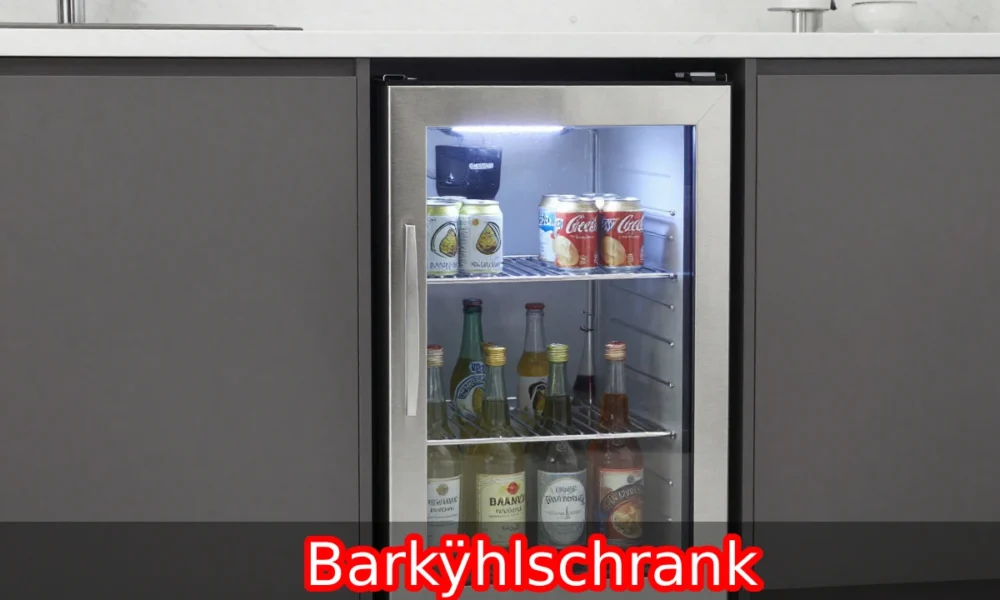
Barkÿhlschrank: What It Is, How It Works, and Whether You Need One
A Barkÿhlschrank is a compact refrigeration unit designed for bar setups, home entertainment areas, or small spaces. It keeps beverages, snacks, and perishables at controlled temperatures without the footprint of a full-size fridge. Units typically range from 15 to 150 liters in capacity.
Most people buy a mini fridge based on price alone. They ignore capacity, compressor type, noise level, and energy draw. That approach leads to a unit that either underperforms or runs up the electricity bill quietly in the corner. This guide breaks down how a Barkÿhlschrank actually works, what separates a good one from a bad one, and how to pick the right size for your space.
What Is a Barkÿhlschrank?
The term comes from German, combining “Bar” (bar or counter) and “Kühlschrank” (refrigerator). In practical terms, it refers to a compact, purpose-built fridge designed for bar areas, home offices, bedrooms, or any space where a full-size refrigerator is impractical.
These units are not just scaled-down versions of kitchen fridges. Many are built with dedicated beverage shelving, glass doors for visibility, and interior lighting that makes contents easy to see without opening the door repeatedly. If you are already thinking about upgrading your home setup, a Barkÿhlschrank is one of the more practical additions you can make to any living or entertainment space.
That matters because every time you open the door, the internal temperature rises, and the compressor has to work harder to bring it back down. A standard Barkÿhlschrank holds between 40 and 120 liters. Larger bar models go up to 150 liters. The smallest tabletop units start around 15 liters, enough for a few cans and a bottle.
How the Cooling System Works
There are two main cooling technologies: compressor-based and thermoelectric.
Compressor models work the same way as full-size refrigerators. A refrigerant circulates through coils, absorbing heat from inside the unit and releasing it through the back or bottom. These units can reach temperatures as low as 0°C and handle warm ambient conditions well. They are louder but more powerful and energy-efficient per liter of storage.
Thermoelectric models use the Peltier effect. When electrical current passes through two different semiconductors, one side cools, and the other heats up. These units have no moving parts, which means near-silent operation. The tradeoff is performance. A thermoelectric unit struggles to maintain low temperatures if the room itself is warm, typically above 25°C. They work best in climate-controlled spaces.
If you plan to keep dairy or food items cold, choose a compressor model. If you want quiet operation for a bedroom or office and are only chilling drinks, a thermoelectric is acceptable.
Key Specifications That Actually Matter
Capacity is the first number most people look at, but it is not the most important one. These are the specs worth checking before you buy:
| Specification | What to Look For |
|---|---|
| Compressor type | Compressor for food storage; thermoelectric for quiet use |
| Energy rating | A++ or higher to keep running costs low |
| Noise level | Below 40 dB for bedroom or office placement |
| Temperature range | 0°C to 10°C minimum for food safety |
| Door style | Glass door for bars; solid door for general use |
| Defrost type | Auto-defrost saves manual maintenance |
Energy consumption is worth paying attention to. A poorly rated 60-liter unit can draw 150 kWh per year. An A++-rated equivalent draws around 100 kWh. Over three years, that difference adds up to real money on your electricity bill.
Choosing the Right Size
Sizing a Barkÿhlschrank comes down to what you are storing and where the unit will sit.
A 15 to 30-liter unit fits on a countertop and holds around 20 to 25 standard cans. This works for a personal desk setup or a small hotel-style room bar.
A 40 to 80-liter unit is the most common choice for home bar setups. It fits under most counters at a standard height of 82 to 85 cm and can hold a mix of bottles, cans, and some food items.
Units above 100 liters start to overlap with full-size under-counter fridges. These make sense for a dedicated bar room, a garage, or a commercial setting with higher throughput.
Measure the space before ordering. Account for ventilation clearance on the sides and back. Most manufacturers recommend at least 5 cm of space around the unit to allow heat to escape. Restricting airflow forces the compressor to work harder and shortens the lifespan of the unit.
Placement and Maintenance
Where you put a Barkÿhlschrank affects how long it lasts and how much it costs to run. Direct sunlight raises the ambient temperature around the unit, which increases the compressor workload. Placing the unit near a heat source like an oven or radiator has the same effect.
For under-counter installation, check that the ventilation direction matches the unit. Some models vent from the back, others from the front. Front-venting units are designed for built-in installation because they do not require rear clearance. If you are working on a broader exterior upgrade for your home, pairing indoor appliance upgrades with exterior improvements gives you the most complete return on investment.
Cleaning the condenser coils once or twice a year improves efficiency. On most units, the coils are accessible from the back or underneath. Dust buildup on the coils acts as insulation, preventing heat from escaping and making the compressor run longer cycles.
Door seals degrade over time. A simple test: close the door on a piece of paper and try to pull it out. If it slides out easily, the seal is no longer creating a proper barrier and should be replaced. A failed seal causes temperature fluctuations and higher energy use.
Common Mistakes When Buying
Buyers frequently overpay for aesthetic features that do not improve performance. An LED-lit glass door looks good but adds to the cost without changing how cold the unit gets.
Another common mistake is buying based on physical size without checking usable interior capacity. A unit with thick insulation walls may look substantial but offer less actual storage than a slimmer model with better-rated insulation.
Noise ratings are often listed in product specs but ignored until the unit is running next to a bed at 2 a.m. If placement matters for sleep or concentration, treat anything above 40 dB as a dealbreaker.
Warranty terms vary significantly. Some manufacturers offer two-year coverage on parts and labor. Others limit coverage to one year on the compressor. A compressor replacement typically costs more than half the original unit price, so warranty terms matter.
FAQs
What temperature should a Barkÿhlschrank be set to?
For beverages, 4°C to 8°C is the standard range. For food storage, keep it at or below 4°C to meet food safety guidelines.
Can a Barkÿhlschrank be used outdoors?
Only if the unit is rated for outdoor use. Standard models are not designed for temperature extremes or humidity exposure.
How long do mini fridges last?
A compressor-based unit lasts 10 to 15 years with regular maintenance. Thermoelectric units typically last 5 to 8 years.
Is a glass door a good idea?
For a bar setup, yes. Glass doors let you see contents without opening the door, which reduces temperature fluctuation and energy use.
Does a mini fridge use a lot of electricity?
An A++-rated 60-liter unit uses around 100 kWh per year, which costs roughly $15 to $20 annually, depending on your electricity rate.
For More Visit this site: Whizweekly