
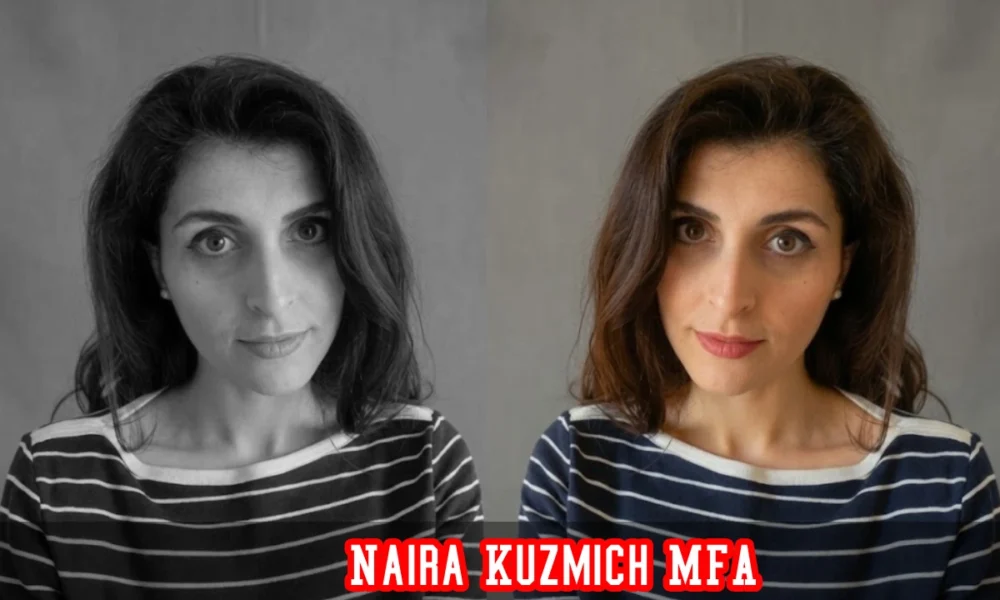
Naira Kuzmich MFA: The Writer Who Gave Armenian-American Life a Literary Voice
Naira Kuzmich MFA (1988–2017) was an Armenian-American writer whose work cut straight to the core of immigrant identity, family grief, and cultural belonging. Born in Yerevan, Armenia, she grew up in Los Angeles’s Little Armenia neighborhood, where the community’s stories, traditions, and inherited grief shaped everything she would later put on the page. Like Maura Mendoza, whose life reflects the weight of carrying cultural roots into a new country, Kuzmich brought that inheritance into every sentence she wrote. The result was a body of fiction and essays that earned major recognition in American literary circles, all before she turned 30.
She died in 2017 from lung cancer at age 29. In the years since, her posthumous works have introduced her to a new generation of readers and confirmed what those who read her early work already knew: she was one of the most precise and emotionally honest voices of her generation.
Who Was Naira Kuzmich?
Kuzmich was born in 1988 in Yerevan, then part of Soviet Armenia. Her family later immigrated to the United States, settling in the Little Armenia district of Los Angeles. That neighborhood, with its Armenian churches, markets, and close-knit community, became the setting and soul of her writing.
Her fiction centered on women: mothers, grandmothers, and daughters navigating the space between two cultures. She did not write about the Armenian-American experience from a scholarly distance. She wrote from inside it, with specificity, humor, and grief that readers immediately recognized as real.
Her essays appeared in Ecotone, The Threepenny Review, Massachusetts Review, Cincinnati Review, and Guernica. Her fiction ran in West Branch, Blackbird, Ninth Letter, and Carve. These are not small venues. Every placement was earned.
The MFA at Arizona State University
Naira Kuzmich’s MFA studies took place at Arizona State University, where she graduated in 2013 with a Master of Fine Arts in Creative Writing, specializing in fiction. ASU’s program is known for producing writers who build serious, lasting careers, and Kuzmich was among its most distinguished alumni.
During the program, she served as an editor for Hayden’s Ferry Review, the university’s well-regarded literary journal, focusing on its international section. She also taught undergraduate writing courses. Both roles sharpened her craft in ways workshopping alone could not. Editing trains a writer to see language with precision. Teaching forces clarity of thought. Kuzmich used both.
Her MFA thesis explored Armenian-American family life and identity, the same territory she would mine throughout her career. By the time she graduated, she was already placing work in respected journals. The MFA did not create her voice. It gave her structure and dedicated time to develop what was already there.
Key Facts at a Glance
| Detail | Information |
|---|---|
| Born | 1988, Yerevan, Armenia |
| Raised | Little Armenia, Los Angeles |
| MFA Institution | Arizona State University |
| MFA Year | 2013 |
| Specialization | Fiction |
| MFA Role | Editor, Hayden’s Ferry Review; Writing Instructor |
| Major Award | O. Henry Prize Stories 2015 |
| Posthumous Collection | In Everything I See Your Hand (2022) |
| Forthcoming Novel | Fearcatcher (October 2025) |
| Died | 2017, age 29, lung cancer |
What the MFA Built in Her Writing
An MFA in creative writing is not a formula. It is a structured environment where a writer can fail, revise, and fail better. For Kuzmich, that structure produced results that appeared almost immediately after graduation.
In 2013, her short story “The Kingsley Drive Chorus” appeared in Salamander magazine. It tells the story of Armenian-American mothers and their troubled sons, narrated from an unusual collective voice that literary critics praised for its control and empathy. Two years later, the story was selected for The O. Henry Prize Stories 2015, one of the most prestigious honors in American short fiction. Like David Sanov, whose creative output reflects the power of sustained discipline, Kuzmich turned academic training into a foundation for work that far outlasted the program itself.
The O. Henry Prize recognition is not a participation award. It signals that a piece of writing stands among the best published in American literary journals in a given year. For a writer who had only recently completed her MFA, that placement was exceptional.
Publications and Recognition
After her MFA, Kuzmich built a publication record that many writers spend decades trying to match. Her essays explored cultural memory with directness and wit. “In a Name,” published in Guernica, examines the significance of the Armenian pomegranate as a symbol of identity. “Dances for Armenian Women,” published in Cincinnati Review in 2017, blends memoir and cultural observation. “My Evil Grandmother Wakes,” published posthumously in Shenandoah in 2019, shows the dark humor she used to process family history.
Her fiction covered illness, displacement, and the lives of Armenian women in America. Her story “Beginning Armenian,” published in Arts and Letters in 2013, opens with a teacher standing before a classroom of women who resemble her mother, teaching them things they already know but pretend they don’t. That single image captures exactly what Kuzmich did so well: find the precise detail that opens into something universal.
In Everything I See Your Hand
In 2022, the University of New Orleans Press published Kuzmich’s posthumous short story collection, In Everything I See Your Hand. The book contains ten stories set primarily in Little Armenia, exploring immigration, family loyalty, cultural inheritance, and the grief that passes quietly between generations.
The collection received strong critical attention. Literary critics praised its precision and emotional range. The fact that a debut collection published five years after the author’s death generated this level of engagement speaks directly to the quality of the work. The book is available through major booksellers and is increasingly taught in university creative writing courses.
Fearcatcher and Her Lasting Influence
Kuzmich’s first novel, Fearcatcher, is scheduled for publication in October 2025. Set in Soviet Armenia during the 1970s and 1980s, the novel follows Ruzan, a foundling raised by a figure known as a fearcatcher. It blends historical realism with mythic elements, tracing themes of fate, identity, and resistance. Like Arlyn Phoenix, whose path through personal adversity shaped a lasting public presence, Kuzmich’s story is one of a writer who produced meaningful, lasting work under enormous personal pressure. Fearcatcher was completed before her death, and its release ensures her literary presence will reach a wider audience than ever.
Her MFA was one carefully chosen chapter in a life built entirely around serious writing. She arrived at Arizona State University with a deep cultural inheritance and left with the craft to honor it on the page. Her fiction does not over-explain. It trusts the reader. That trust is exactly why her work continues to find new readers nearly a decade after her death.
Frequently Asked Questions
What is Naira Kuzmich MFA?
Naira Kuzmich earned a Master of Fine Arts in Creative Writing from Arizona State University in 2013. She specialized in fiction and also served as an editor for Hayden’s Ferry Review and as a writing instructor during the program.
What did Naira Kuzmich write?
She wrote short fiction and personal essays. Her story “The Kingsley Drive Chorus” was selected for The O. Henry Prize Stories 2015. Her posthumous collection, In Everything I See Your Hand, was published in 2022 by the University of New Orleans Press.
How did Naira Kuzmich die?
She died in 2017 at age 29 from lung cancer.
Where can I read her work?
Her collection In Everything I See Your Hand is available from the University of New Orleans Press and major booksellers. Many of her essays also remain accessible through the literary journals that originally published them.
Is Fearcatcher available yet?
The novel is scheduled for publication in October 2025. It is Kuzmich’s only novel, completed before her death, and set in Soviet Armenia during the 1970s and 1980s.
No Comment! Be the first one.