
NLPadel: Why Padel Is Taking Over the Netherlands
NLPadel refers to the full padel ecosystem in the Netherlands — clubs, courts, players, tournaments, and community platforms. The Netherlands has over 700 padel courts and 500,000 active players. The KNLTB officially recognized padel in 2016, fueling rapid national growth across all age groups and skill levels.
Padel is not new to Europe. But the speed at which the Netherlands adopted it is hard to ignore. From fewer than 50 courts in 2015 to over 700 by 2023, the growth curve has been steep and consistent. NLPadel captures that story — not as a single brand or governing body, but as a term that describes the entire padel culture, infrastructure, and community in the Netherlands.
If you want to understand what NLPadel means, how the sport works, where it stands today, and why it keeps growing fast, this guide covers all of it.
What NLPadel Actually Means
The term itself is straightforward. “NL” is the country code for the Netherlands, and “padel” is the sport. Together, NLPadel describes the padel world as it exists in the Netherlands — clubs, players, courts, leagues, coaching systems, digital platforms, and the growing community around all of it.
There is no single organization that owns the name. Instead, it functions as a collective identity. You will see it used by club websites, booking platforms, media outlets, and community groups that cover Dutch padel. The Royal Dutch Lawn Tennis Association (KNLTB) manages the official structure through its padel division at nlpadel.nl, but the term itself extends far beyond that organization.
This distinction matters. NLPadel is a concept before it is a platform. It reflects how padel has become embedded in Dutch sports culture at a national scale.
What Is Padel and How Does It Work
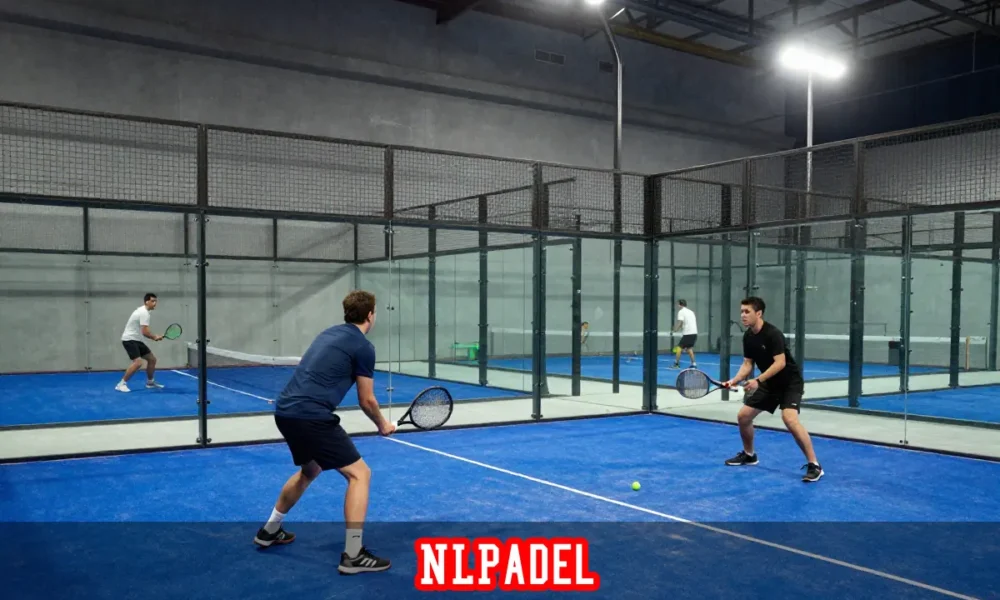
Padel is a racket sport played on a 10 x 20 meter enclosed court with glass walls and metal mesh fencing. It is almost always played in doubles. The scoring system follows tennis, but the walls are live — players can use them to keep a rally going, similar to squash.
The equipment is simpler than tennis. Padel rackets are solid, with no strings, and the ball is slightly lower in pressure than a standard tennis ball. Most beginners can play a functional rally within their first session.
That accessibility is a core reason for NLPadel’s growth. You do not need years of training to enjoy the game. A beginner and an intermediate player can share a court and still have a competitive, fun match. This sets padel apart from tennis, where skill gaps tend to make mixed-level games frustrating.
| Feature | Padel | Tennis |
|---|---|---|
| Court size | 10 x 20 m | 10.97 x 23.77 m |
| Format | Doubles (standard) | Singles or doubles |
| Walls | Yes, in play | No |
| Beginner learning curve | Low | Moderate to high |
| Match duration | 45–75 minutes | 60–120 minutes |
How NLPadel Grew So Fast
The KNLTB officially recognized padel in 2016. That decision gave the sport institutional support — structured rankings, national tournaments, certified coaching programs, and access to existing tennis infrastructure. Tennis clubs were the first to act. Many converted unused courts or added padel courts alongside existing facilities, which kept startup costs low and gave players a familiar environment to try something new.
From there, word of mouth did much of the work. Early adopters played a critical role in shaping NLPadel’s foundation. Tennis clubs, fitness centers, and independent facilities began installing courts and hosting introductory sessions that lowered hesitation among newcomers. Players invited friends, colleagues, and family members to join, accelerating organic growth.
The Dutch climate also pushed the indoor court model forward. Because outdoor play is unreliable for much of the year, clubs invested in covered, climate-controlled facilities. This allowed year-round participation, which kept player numbers stable across seasons instead of dropping off in winter.
In 2015, there were fewer than 50 padel courts in the Netherlands. By 2023, that number had grown to over 700 courts nationwide. Cities like Amsterdam, Rotterdam, Utrecht, and The Hague now have modern, fully booked facilities.
The Structure Behind NLPadel
NLPadel runs on a layered system. At the top, the KNLTB manages national rankings, tournament sanctioning, and coach certification. Under that structure, hundreds of clubs operate independently, offering open play, leagues, and training programs.
The KNLTB uses a Dynamic Play Strength System (DSS) to match players at appropriate skill levels for competitive play. Every player who joins a KNLTB-affiliated club or purchases a player pass receives a play strength and rating for padel. Points are earned through official KNLTB tournaments — P100, P250, and P500 — with higher advancement earning more points. Points remain valid for 52 weeks.
This system gives recreational players a clear path into competition without needing a high skill level to start. It also creates motivation to improve, because your rating moves based on actual results.
For players aiming higher, international FIP (Fédération Internationale de Padel) tournaments offer bonus points that feed back into the national ranking. The KNLTB is the official padel federation for the Netherlands under FIP.
Training, Clubs, and Community
Professional coaching plays a key role in the credibility of NLPadel. Structured training programs help beginners learn fundamentals while allowing advanced players to refine tactics and positioning. Many coaches have international certifications and competitive experience.
Beyond individual improvement, clubs serve as social hubs. Many organize regular round-robins, themed social evenings, and beginner introduction sessions. This keeps participation rates high among players who are not competing at a league level but still want regular, structured activity.
Digital tools have made access easier. Online court booking, match-finding platforms, and community apps reduce the friction of organizing a game. You can find an available court, book it, and invite players through one platform — a change that particularly appeals to younger, time-pressed players.
NLPadel has also made deliberate efforts to grow the women’s game. The KNLTB’s women’s program has reached over 70,000 female players, with dedicated tournaments, events, and promotional content targeted at women who are new to racket sports.
What to Expect as a New Player
Court rental in the Netherlands typically runs between €20 and €40 per hour, depending on the location and time slot. Most clubs offer racket rentals, so you do not need your own equipment to start. Many facilities run beginner clinics on weekday evenings that cost less than a standard court rental.
If you want to compete, joining a KNLTB-affiliated club gives you access to the national ranking system, local leagues, and tournament calendars. You do not need experience to register — the DSS system handles player matching automatically.
FAQs
What does NLPadel mean?
NLPadel refers to the entire padel ecosystem in the Netherlands — clubs, courts, tournaments, and the player community. It is not one organization, but a term for Dutch padel as a whole.
Do I need tennis experience to play padel?
No. Padel has a low learning curve. Most beginners can play a basic game within their first session.
How many padel courts are there in the Netherlands?
Over 700 courts existed by 2023, with new facilities continuing to open across major cities and smaller towns.
How does the Dutch padel ranking work?
The KNLTB uses a Dynamic Play Strength System. Players earn points at official P100, P250, and P500 tournaments. Points expire after 52 weeks, and rankings update throughout the season.
Is padel popular with women in the Netherlands?
Yes. The KNLTB’s women’s program has attracted over 70,000 female players, with dedicated events and tournaments designed to increase participation.
Padel’s rise in the Netherlands was not accidental. It matched the right sport to the right culture at the right time — accessible, social, short in duration, and easy to fit around a busy life. NLPadel is the name that holds all of that together, and by every measurable indicator, it is still growing.
For More Visit this site: Whizweekly