
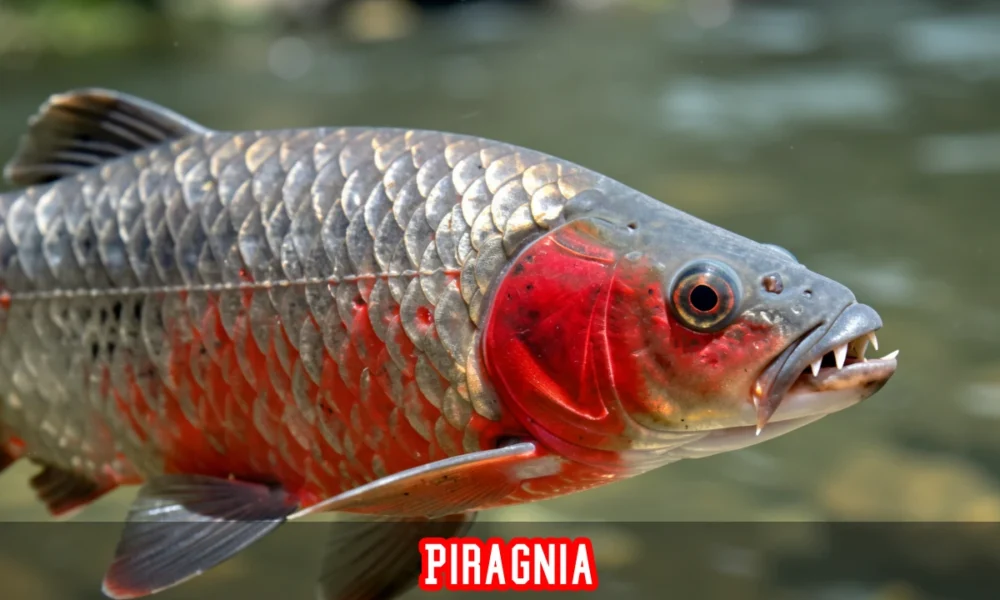
Piragnia: Understanding the Most Misunderstood Fish in South America
Piragnia is not an official biological term. The word appears in online searches as a common misspelling or alternate spelling of piranha, the razor-toothed freshwater fish native to South America. This confusion stems from several sources: typing errors, automatic translation tools, and phonetic variations across different languages and accents.
The correct term, piranha, comes from the Old Tupi language, specifically from “pirãîa,” meaning “biting-fish.” First documented in 1585 in a Portuguese-Tupi dictionary, the name perfectly describes these fish with their distinctive triangular teeth and powerful jaws.
When people search for piranha, they’re typically looking for information about piranha—fish that inhabit rivers throughout South America, particularly in the Amazon Basin. More than 60 species exist, though only a handful pose any potential risk to humans.
Where Piranhas Actually Live
Piranhas thrive in warm freshwater environments across South America. You’ll find them in major river systems, including the Amazon, Orinoco, Paraguay, and San Francisco rivers. They prefer slow-moving waters with dense vegetation that provides both cover and hunting grounds.
The Amazon River alone hosts 20 different species, making it the most diverse piranha habitat on Earth. These fish inhabit rivers, lakes, floodplains, and reservoirs. During rainy seasons, they migrate to flooded forests and temporary pools created by rising water levels.
Red-bellied piranhas (Pygocentrus nattereri) have the widest geographic distribution, covering much of the Neotropical region. Other species remain restricted to single river systems. In some Venezuelan streams, up to seven different species coexist in the same waterway.
Physical Characteristics That Define These Fish
Piranhas have deep, laterally compressed bodies that typically measure 15 to 25 centimeters long, though some specimens reach 50 centimeters. Their most famous feature is their teeth—sharp, triangular, and replaceable throughout their lifetime.
These fish possess powerful jaws with muscles attached close to the jaw tip, creating a mechanical advantage that favors force over speed. The black piranha (Serrasalmus rhombeus) produces one of the most forceful bites measured in any bony fish, generating 320 Newtons of force. When scaled for body size, this exceeds the relative bite force of great white sharks by three times.
Coloration varies widely from silvery with orange undersides to almost completely black. Red-bellied piranhas display their namesake red coloring from chin to belly, with gray bodies flecked with silver scales. Their rounded, snub-nosed profile houses these formidable jaws behind thick, fleshy lips that usually conceal the teeth.
What Piranhas Really Eat
Despite their reputation, piranhas are omnivores, not exclusive carnivores. Their diet includes fish, insects, crustaceans, seeds, fruits, leaves, and carrion. Research on stomach contents shows that 75-81% consists of fish, with approximately 10% being fruits or seeds.
Young piranhas consume copepods, crustaceans, and insects. Adults feed opportunistically on whatever food sources are available. Some species, called wimple piranhas (genus Catoprion), survive exclusively by nipping fins and scales from other fish, which then swim away to heal completely.
During dry seasons, when water levels drop, and piranhas become trapped in stagnant pools, food scarcity can trigger aggressive behavior. But even under these extreme conditions, attacks on large animals remain rare exceptions rather than normal behavior.
Debunking the Man-Eating Myth
The widespread fear of piranhas traces back to Theodore Roosevelt’s 1914 book “Through the Brazilian Wilderness.” Roosevelt described piranhas as “the most ferocious fish in the world” and claimed they could devour a cow or human alive. However, historians now recognize that local guides likely staged the feeding frenzy Roosevelt witnessed using starved fish and a cow carcass.
Fatal piranha attacks on humans are extremely rare. Dr. Herbert R. Axelrod, after 25 years traveling South American rivers, stated he never met anyone who was bitten by piranhas, despite these waters containing numerous piranha schools. Indigenous people swim daily in piranha-inhabited rivers without incident.
When attacks do occur, they typically happen under specific conditions: during breeding season when piranhas guard nests, in areas where people clean fish regularly, during severe drought when food becomes scarce, or when humans inadvertently provoke the fish. Most bites result in minor injuries, not fatal outcomes.
The notion that piranhas hunt in coordinated packs is another misconception. Red-bellied piranhas travel in shoals of 20 to 100 individuals primarily for defense against predators like dolphins, caimans, and large piscivorous fish. They communicate through barking and thudding sounds but show little evidence of cooperative hunting behavior.
Why Environmental Conditions Matter
Piranha behavior changes dramatically based on environmental factors. During rainy seasons, abundant food and high water levels mean piranhas pose minimal threat. They disperse widely across flooded areas with plenty of resources.
Dry seasons present different conditions. As water levels drop, piranhas concentrate in smaller pools with depleted food supplies. Stress levels rise, and these fish become more defensive and territorial. This is when the majority of reported human encounters occur.
Water temperature, food availability, and competition all influence aggression levels. In their natural habitat with normal conditions, piranhas are timid scavengers that fulfill a role similar to vultures on land—cleaning up dead animals and maintaining ecosystem health.
Their Actual Role in River Ecosystems
Piranhas play essential roles in maintaining aquatic ecosystem balance. As both predators and scavengers, they control populations of other fish species and dispose of carrion, preventing disease spread in their habitats.
Their feeding habits on fins and scales help regulate fish populations without killing prey. This selective predation promotes biodiversity by preventing any single species from dominating. When piranha populations decline due to habitat loss or overfishing, ecosystem imbalances can occur.
Natural predators of piranhas include crocodiles, Amazon river dolphins, herons, otters, larger fish like arapaima, and even other piranhas. This predator-prey relationship maintains population levels and ecosystem health.
Practical Safety Guidelines
For those visiting South American rivers, simple precautions reduce any minimal risk. Avoid swimming during the dry season when water levels are low, and food is scarce. Don’t enter water with open wounds or while handling fish. Respect breeding areas during mating seasons.
If you accidentally fall into piranha-inhabited water, swim calmly to shore without splashing. Thrashing creates vibrations that piranhas associate with distressed prey. Quiet, steady movements rarely trigger defensive responses.
Local communities that live alongside these fish understand their behavior and coexist safely. Following their guidance and respecting the natural environment ensures positive experiences.
Separating Hollywood from Reality
Movies like “Piranha” (1978) and its remakes created exaggerated perceptions that persist today. These films portrayed piranhas as relentless killers that attack anything in water, stripping victims to skeletons within seconds.
Scientific evidence contradicts these depictions entirely. Piranhas are complex animals with varied behaviors, dietary needs, and environmental adaptations. Understanding them accurately helps us appreciate their ecological importance rather than fearing them unnecessarily.
The sensational stories that built the piranha myth overshadow their actual nature as opportunistic feeders that prefer to avoid humans. Respecting wildlife and maintaining informed perspectives allow humans and piranhas to coexist peacefully in shared environments.